
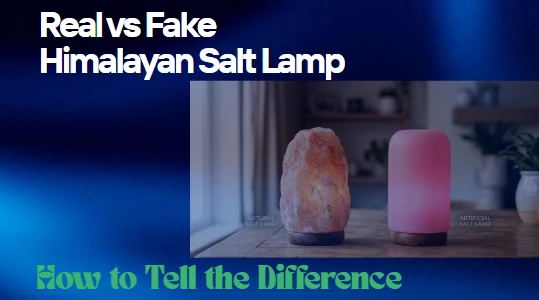
Real vs fake himalayan salt lamp is a common question for anyone buying home decor online or in stores. With these glowing lamps sold everywhere, quality varies a lot. The market is crowded with imitation products designed to look convincing in a photo but fall short in person.
Some products labeled as Himalayan salt lamps are made from cheaper materials with a painted coating. They are not carved from an actual solid block of salt. Here is how to tell a real one from a fake using simple checks you can do yourself at home.
Check the Color and Pattern
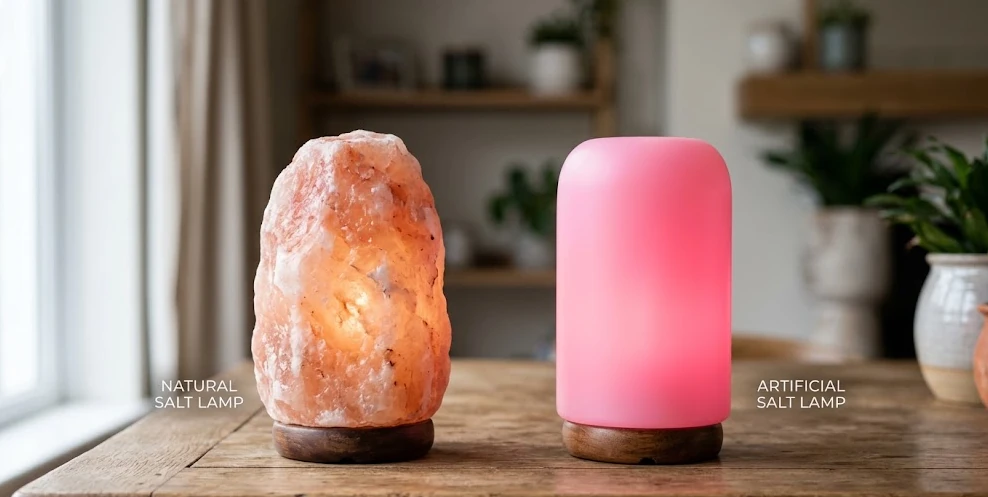
Genuine Himalayan salt crystal has natural and uneven color variation. It ranges from pale pink to deep orange within the same lamp. This happens because it is a natural mineral formed over millions of years under varying geological conditions. A fake lamp is often made from a mold with a painted or dyed coating. It usually has a flat and uniform color with little to no natural variation.
It might look almost too perfectly pink or orange throughout the entire surface. Hold the lamp up to a light source and look closely at the internal patterns. A genuine crystal will typically show natural cloudiness, subtle veining, or internal fractures that catch the light unevenly. A fake or resin based product often looks more uniformly clear, lacking that organic and layered quality.
Feel the Surface
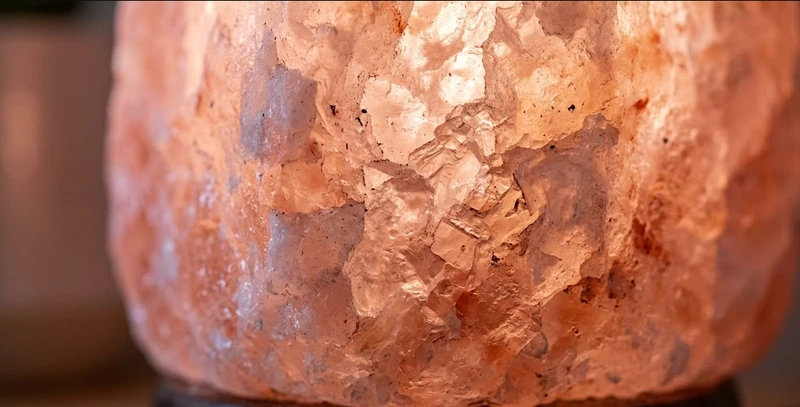
Real salt crystal has a slightly rough and natural uneven texture. It is carved or shaped from a solid block instead of molded into a uniform shape. Fake versions are often made from crushed salt mixed with a binder or resin and pressed into a mold. They usually feel smoother and more uniform, closer to plastic or ceramic than natural stone. They often lack the slightly grainy quality you would expect from a mineral that has simply been shaped and polished.
The Water Test
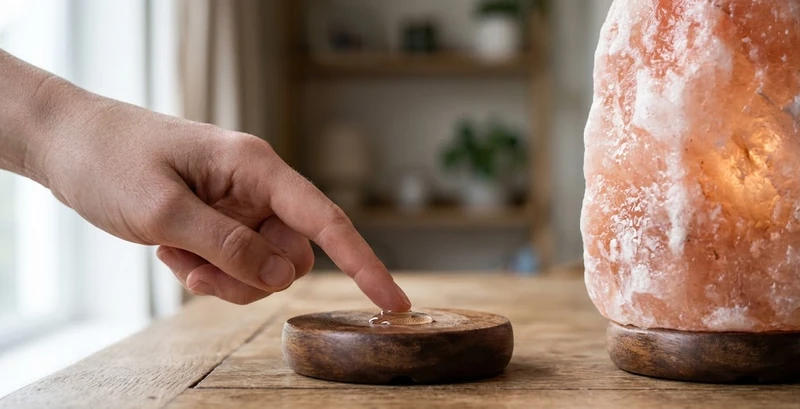
A small and careful test is to dab a tiny amount of water onto an inconspicuous part of the lamp. Choose the base or an area that will not be visible. Genuine salt will begin to dissolve slightly and feel slick or slightly sticky as it absorbs moisture. Salt is naturally hygroscopic and reacts predictably to contact with water. A fake lamp coated in resin or paint will simply repel the water without any reaction. The water will sit on the surface as a bead instead of being absorbed or causing any visible change.
Check the Weight
Genuine salt crystal is notably dense and heavy for its size. It is generally noticeably heavier than you might expect just by looking at it. If a lamp feels unexpectedly light for its dimensions, that is a strong sign it may be made from crushed salt mixed with lightweight fillers, resin, or even a hollow core. It is not a solid natural crystal cut from a larger block.
Sweating Is a Sign of Authenticity
Genuine Himalayan salt lamps are hygroscopic. This means they naturally attract moisture from the air. This happens often in humid surroundings or during rainy seasons. If your lamp sometimes develops a small amount of moisture or a slightly damp feel on the surface, that is actually a sign it is real salt. It is not a defect. It is one of the more reliable long term indicators of authenticity once you own the lamp. If you want to learn more about managing this, our guide on how to clean salt lamp explains how to handle moisture safely.
Look at the Base and Fittings
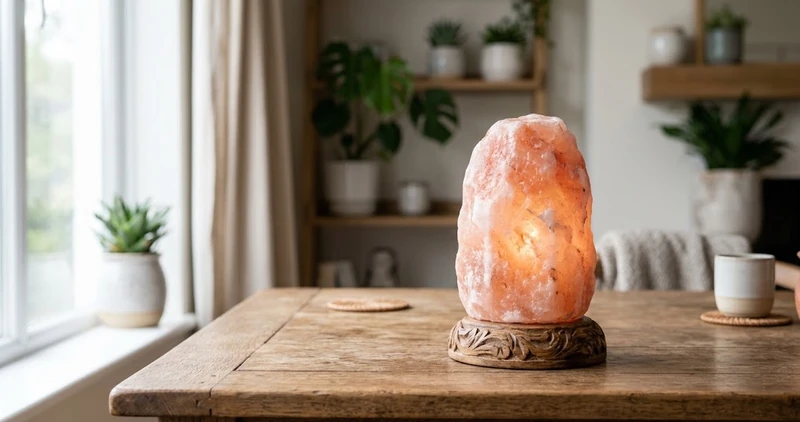
Genuine lamps are typically mounted on a wooden base. This is often neem or mango wood, carved to fit the natural and irregular shape of the salt crystal above it. Because each crystal is unique, the base often shows a customized and hand carved fit. It does not have a perfectly uniform mass produced groove. Cheaper fakes sometimes use plastic bases or bases that are clearly designed for a uniform shape. This can be a subtle but useful clue.
Buy From a Reputable Source
The most reliable way to ensure authenticity is to buy from a seller who can specify the mining origin. This is typically the Khewra Salt Mine region in Pakistan. Look for sellers who provide clear product details instead of vague marketing language that avoids specifics. Extremely low prices compared to similarly sized lamps from known sellers are often a red flag.
If you want to bring more authentic, natural Himalayan salt into your home beyond just a lamp, consider cooking or serving on genuine salt tiles.
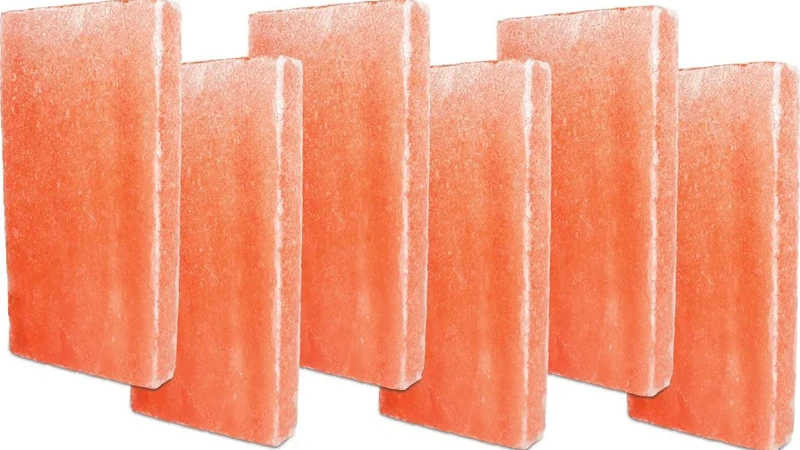
Himalayan Salt Tiles – No 1 Professional Pink Salt Panels for Wellness Spaces | Premier Halite
Transform your wellness space with our Himalayan Salt Tiles. Hand-cut from genuine pink salt crystals, these tiles bring natural warmth, subtle humidity control, and a calming aesthetic to salt rooms, spas, and meditation areas. Each tile features unique color variations and a smooth finish for easy installation. Perfect for architects, designers, and wellness centers across the USA and Canada.
Quick Product Details
- Material: 100% natural Himalayan pink salt crystal
- Dimensions: 8 inches length x 4 inches width x 1 inch thickness
- Finish: Smooth, hand-polished surface
- Use: Indoor wellness spaces, accent walls, backlit features
- Installation: Standard tile mounting on dry, prepared walls
- Care: Dry wipe only, avoid direct moisture or steam
- Note: Natural color and texture variations are expected
Like our lamps, these tiles are sourced directly from the Khewra Salt Mine, ensuring you get 100% real, unprocessed mineral stone for your kitchen or decor.
Genuine salt crystal lamps require actual mining and hand shaping. This carries a real production cost that a resin imitation does not. If you want to understand more about the natural origins of this mineral, our article on why is himalayan salt pink explains the science in simple terms.
What to Do If You Suspect Your Lamp Is Fake
If several of these checks point toward an imitation, you are not out of options. Some fake salt lamps are still nice decorative pieces. There is nothing wrong with keeping one purely for its appearance. Just do not expect the properties of genuine crystal. If authenticity matters to you, reach out to the seller with photos and ask about the sourcing. Most reputable sellers offer a return or exchange window. If a return is not possible, a fake lamp can still function well as a simple decorative light fixture.
It just will not have the natural mineral qualities that motivated the purchase. Future purchases can be made more carefully with these checks in mind. You can also explore other genuine natural wellness products, like learning how to use himalayan bath salt for a relaxing soak at home.
The Main Point
A genuine Himalayan salt lamp has natural color variation, real weight, a slightly rough texture, a hand fitted wooden base, and a tendency to sweat in humid air. A few simple checks at home can save you from an imitation and help you buy with confidence next time. This applies whether you are purchasing your first lamp or adding another to your collection. Taking a few extra minutes to run through these checks before or after a purchase is a small investment. It pays off by making sure you get what you paid for and by knowing how to care for the lamp properly once it is home.
Frequently Asked Questions
Does a fake salt lamp still give off a nice light
It can look similar when lit, since the light diffusion effect is mostly about the shape and translucency of the material. However, it will not have the qualities associated with genuine salt crystal, such as natural color variation and the tendency to sweat in humid air.
Why does my real salt lamp sweat or leak water
This happens because salt naturally draws moisture from the air. It is normal, mainly in humid climates. You can manage it by keeping the lamp lit regularly, which gently warms and dries the surface, reducing how much moisture accumulates.
Are all pink colored lamps genuine Himalayan salt
No. Color alone is not a reliable indicator, since fake versions are often dyed pink mainly to mimic the appearance of real salt crystal, sometimes quite convincingly at a glance.
Can I test authenticity without damaging the lamp
Yes. The weight check, visual inspection of color variation, and checking the base construction are all non invasive tests. The water test should be done in a small and hidden spot to minimize any visible effect if you decide to proceed with it.