
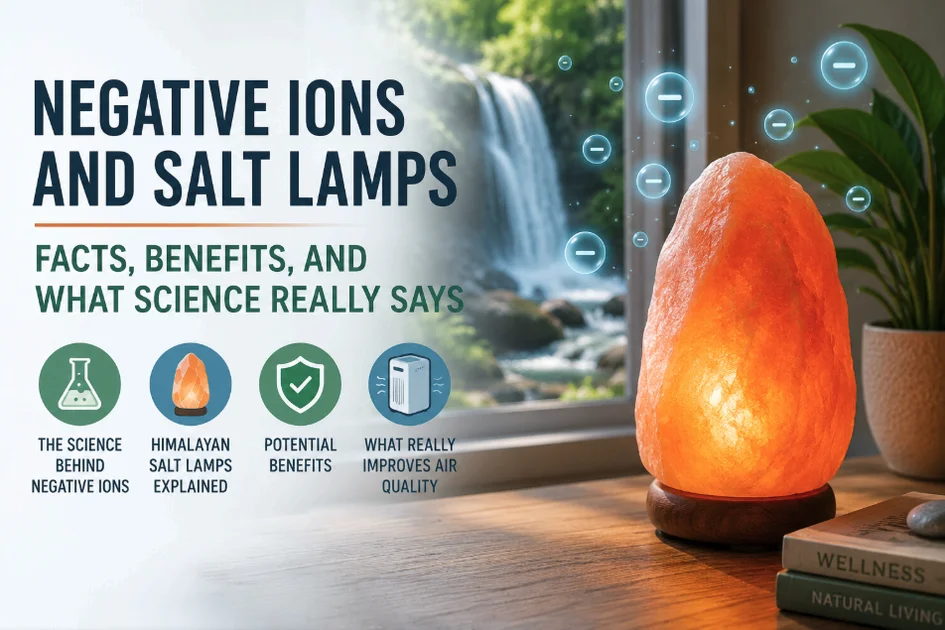
Negative ions benefits are a topic that comes up a lot when people talk about air purifiers, salt lamps, or the fresh feeling you get near a waterfall or the ocean. The claims around these invisible particles range from mood improvement to cleaner air and increased energy. But how much of this is backed by solid science? And how much is just marketing built on top of a genuinely interesting but limited body of research? Here is a grounded and honest look at what negative ions are and what they can realistically do for you.
What Negative Ions Actually Are

A negative ion is simply an atom or molecule that has gained an extra electron. This gives it a negative electrical charge. They occur naturally around moving water, including waterfalls, ocean waves, and rivers. You also find them during and after thunderstorms, as well as in forests, especially around dense vegetation and moving air. This is one reason those places often feel fresher and more pleasant than stagnant indoor air.
Positive ions, on the other hand, often build up in enclosed or artificial spaces. They are produced in part by electronic devices, air conditioning systems, and certain synthetic materials. This difference between the two settings helped shape the popular belief that negative ions are inherently good while positive ions are bad. Scientific research, however, paints a more detailed picture than that simple idea suggests.
What the Research Actually Shows
Scientific research on negative ions is limited, and the findings are mixed. This point often gets lost in consumer marketing. Some smaller studies have looked at a possible link between negative ions and mood. A few report modest benefits for seasonal mood changes. These studies usually use high-output negative ion generators in controlled clinical settings. Others have found no measurable effect.
Overall, the available evidence is not strong enough to make confident medical claims. Larger, well-controlled, long-term studies are still needed. Most of the more promising research used devices that produce ion concentrations far higher than those generated by a typical consumer product in a home. Keep this difference in mind when judging bold marketing claims.
The Air Quality Claim
One of the more common claims is that negative ions clean the air. The theory is that they attach to dust, pollen, and other airborne particles. This causes the particles to become heavier and settle instead of remaining suspended and being inhaled. There is a scientific basis for this idea. That is why ionizing air purifiers exist as a category of consumer products built around this principle.
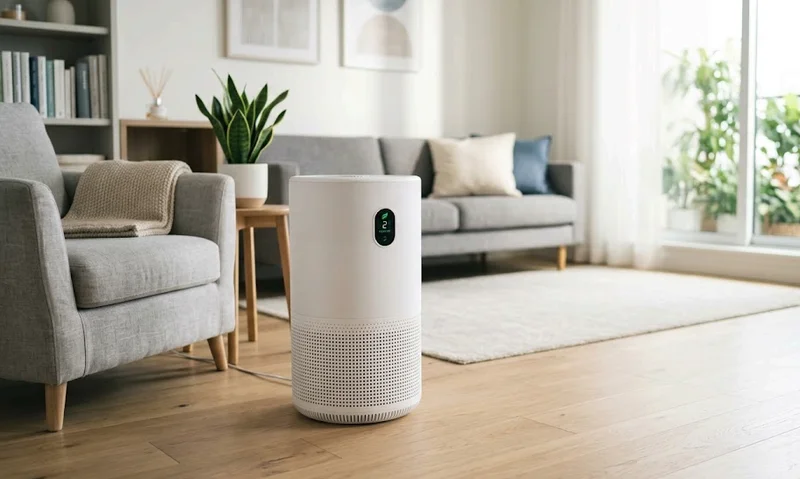
However, the effect is generally modest compared with mechanical filtration methods like HEPA filters. Ionizing purifiers can also produce small amounts of ozone as a byproduct of the ionization process. This is something to keep in mind. It matters most for people with asthma or other respiratory sensitivities because ozone can irritate the lungs, even at low concentrations.
Understanding Real Negative Ions Benefits from Salt Lamps
This is one of the most repeated claims in wellness marketing, but the scientific backing is weak. Studies measuring ion output from Himalayan salt lamps have generally found that the amounts produced are extremely small. They are far too low to have a measurable effect on air quality or human health in a typical room, especially one of average size.
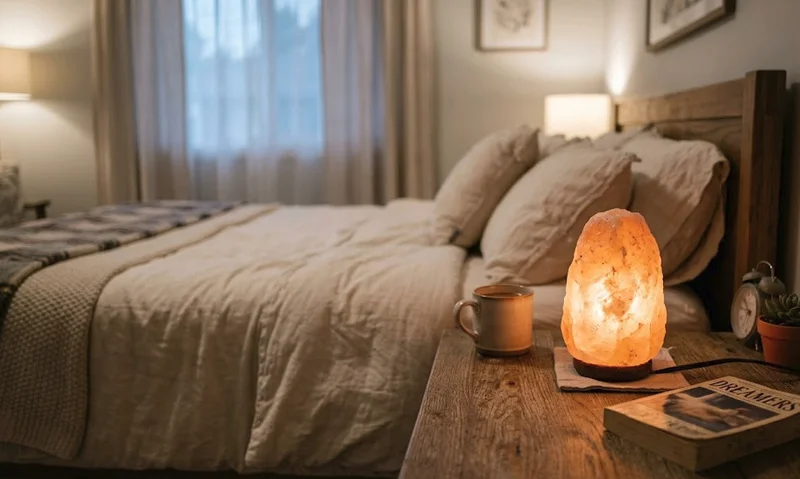
Salt lamps are lovely decorative light sources. You can read more about the real himalayan salt lamp benefits to understand what they actually do. The ion-related claims attached to them are not well supported by independent testing. Several controlled studies have found their ion output to be negligible. In some cases, it is almost indistinguishable from the background levels already present indoors.
If you’re looking for a Himalayan salt lamp for its warm glow and natural appearance, take a look at our collection below.
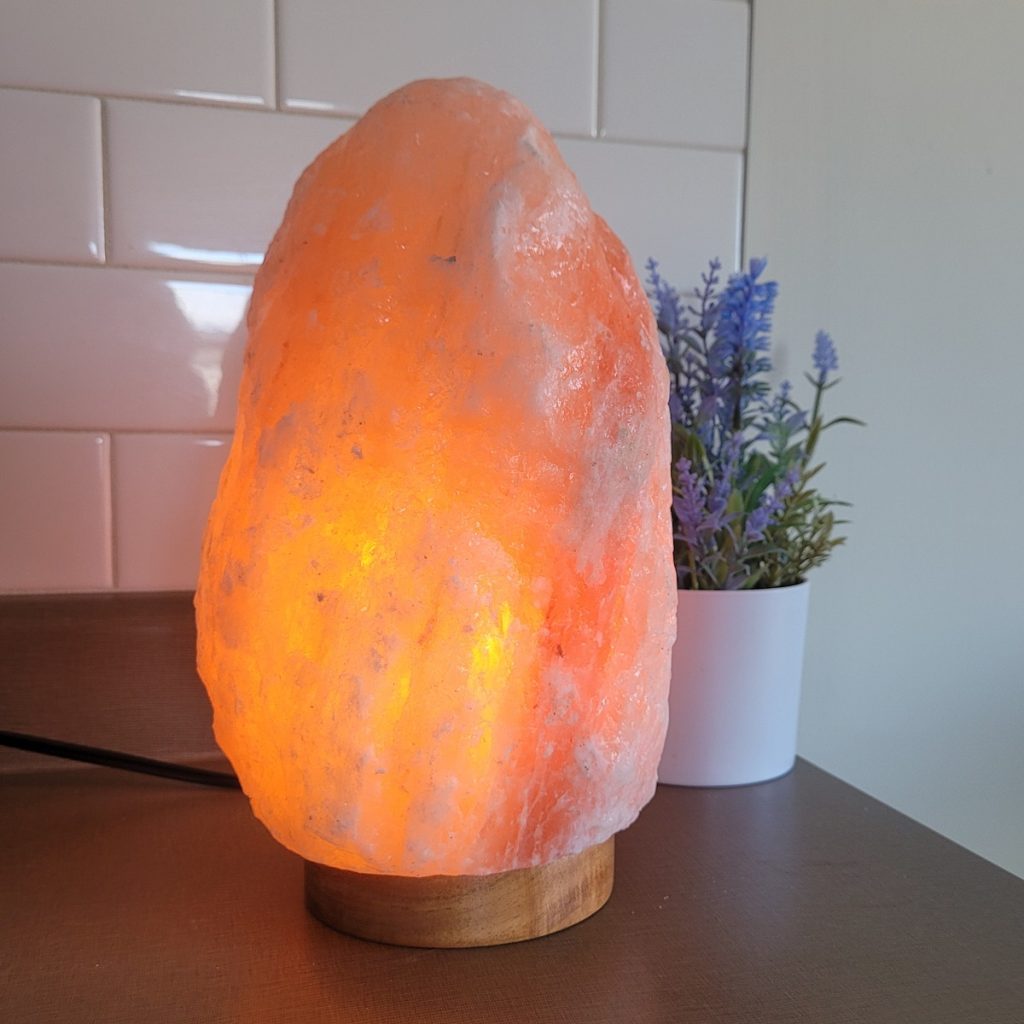
Pink Salt Lamp Large, 100% Natural and Authentic Natural Salt
Salt Lamp Large
About this item
- Pink Salt Lamp Large – natural Himalayan crystal salt lamp on a wood base
- Color: Pink, Orange | Origin: Pakistan | Material: Himalayan Crystal Salt
- Size: 7–8.5 lbs (6.5–8.5 inches tall)
- Warm amber glow, ideal night light for bedrooms, living rooms & meditation spaces
- Each lamp is unique natural color/shape variation is normal
- Includes: C7 Light Cord and 15W C7 Bulb to prevent weeping and keep the glow steady
7 in stock (can be backordered)
Where Negative Ions Might Genuinely Help
The strongest and most consistent findings in this area come from certain industrial and clinical applications. For example, they can reduce airborne bacteria in controlled settings. This is very different from the broad wellness claims often made about products for home use. Some research on light therapy for seasonal affective disorder has also looked at negative ion generators as a comparison treatment. The results are mixed but have occasionally shown promise within that narrow context. These studies use devices with ion output far higher than that of typical consumer products.
A Reasonable Way to Think About It
It is fair to enjoy how fresh the air feels after a storm or near a waterfall. You do not need negative ions to explain the experience. Factors like humidity, temperature, lower pollen levels, and simply being outdoors and physically active can all contribute to that feeling. If a product marketed around negative ions appeals to you because of its design or ambiance, that is a perfectly good reason to enjoy it. Just do not expect it to replace an air purifier with proven filtration or a wellness practice backed by clinical evidence.
When you buy natural mineral products, it is always good to know the facts. For example, why is himalayan salt pinkexplains the natural beauty of these items without creating unrealistic expectations about medical benefits.
Practical Steps for Air Quality That Actually Work
If your real goal is improving indoor air quality, there are better ways to do it. A HEPA filter air purifier is a proven choice. Regular ventilation by opening windows when outdoor air quality allows is another great step. You should also reduce indoor sources of pollutants like certain harsh cleaning products. Keeping humidity at a reasonable level is also highly effective.
These steps all have much stronger and more consistent evidence behind them than ion based products. These practical actions address air quality directly. They do not rely on a mechanism that remains only weakly supported by current research. If you own a salt lamp, remember that proper care keeps it looking beautiful. Learning how to clean salt lamp surfaces ensures it stays a lovely part of your home decor for years to come.
How to Read Wellness Marketing Claims
Negative ions are a good example of a broader pattern seen in wellness marketing. A measurable scientific phenomenon is often extended into much larger medical claims than the available evidence supports. A useful habit when looking at products that make medical claims is to ask a simple question: Is the claim backed by a large body of consistent, well-designed research, or does it rely on a single small study, personal stories, or a plausible mechanism that has not been tested at the scale being advertised?
This does not mean dismissing every wellness product. It simply means approaching bold claims with a healthy dose of skepticism until stronger evidence becomes available.
Final Thoughts
Negative ions are a measurable natural phenomenon. However, many of the medical claims attached to them go further than the current scientific evidence allows. This is especially true for consumer products like salt lamps. Enjoy these products for what they genuinely offer, whether that is ambiance, attractive design, or personal preference. For cleaner indoor air and better respiratory comfort, rely on methods backed by stronger evidence, including HEPA filtration and good ventilation.
FAQs
Are negative ions dangerous?
Naturally occurring negative ions are not considered dangerous. The main caution involves artificial ionizing devices that can produce ozone as a byproduct in poorly ventilated spaces. This is something to be aware of if you use one regularly.
Do negative ions really affect mood?
The research is mixed and not conclusive. Some small studies suggest a modest effect, especially with high-output devices used in clinical settings. However, the available evidence is not strong enough to make firm claims for typical consumer products used at home.
Is an ionizer the same as an air purifier?
No. Traditional air purifiers usually use HEPA filters to physically trap airborne particles. Ionizers electrically charge particles so they settle out of the air. This works differently and has less evidence for overall air cleaning than HEPA filtration.
Can salt lamps replace an air purifier?
No. Independent testing has found that salt lamps produce far too few ions to affect air quality in a noticeable way. They should not be used as a substitute for a proper air purifier.
Where do negative ions occur naturally?
They occur around moving water, including waterfalls, rivers, and ocean waves. They are also present in forests, after thunderstorms, and in areas with dense vegetation and moving air.