

Salt water for pink eye is a home remedy many people search for when their eyes feel itchy, red, or crusty. Pink eye is uncomfortable and spreads easily. It sends a lot of people looking for simple home approaches before heading to the doctor. A warm saline rinse is one of the most commonly mentioned options. Here is what it can truly help with, how to use it safely, and where its limits are. Depending on it alone in the wrong situation can actually delay the care you need.
Important Medical Warning for Readers
This article is for general information only. It is not a substitute for professional medical advice, diagnosis, or treatment. Pink eye can sometimes lead to serious complications if it is not treated correctly. Always consult a doctor or eye care specialist before trying any home remedy. This is especially important for infants, young children, or anyone who wears contact lenses.
If you experience severe eye pain, changes in your vision, sensitivity to light, or thick yellow or green discharge, seek medical attention immediately. Do not delay professional care by relying solely on home treatments.
When in doubt, a sterile saline solution purchased directly from a pharmacy is always the safest and most reliable option for your eyes. Your health and safety should always come first.
What Is Pink Eye
Pink eye, also known as conjunctivitis, is inflammation of the thin membrane covering the white of the eye and the inner eyelid. It can be caused by a viral infection, a bacterial infection, or an allergic reaction. Sometimes, irritants like chlorine, smoke, or foreign particles cause it.

The cause matters a lot. It affects how the condition should be treated, how long it usually lasts, and how contagious it is to others. Viral conjunctivitis is the most common form. It is highly contagious and often comes with a cold or upper respiratory infection. Bacterial conjunctivitis often produces thicker and more colored discharge. It usually requires antibiotic treatment. Allergic conjunctivitis is not contagious at all. It usually causes itching and a clear, watery discharge in both eyes.
How a Salt Water Rinse Works
A saline mixture is made from salt dissolved in sterile or boiled and cooled water at a gentle concentration. It can help by gently washing away irritants, discharge, and crusting from the eye. This can ease discomfort and help keep the eyelids from sticking together. This is especially helpful when discharge is watery instead of thick.
Saline is also similar in salt concentration to the natural tears of the eye. This is why a properly diluted mixture feels far more comfortable than plain tap water. It is less likely to cause extra irritation when rinsing an already inflamed eye.
Choosing the Right Salt
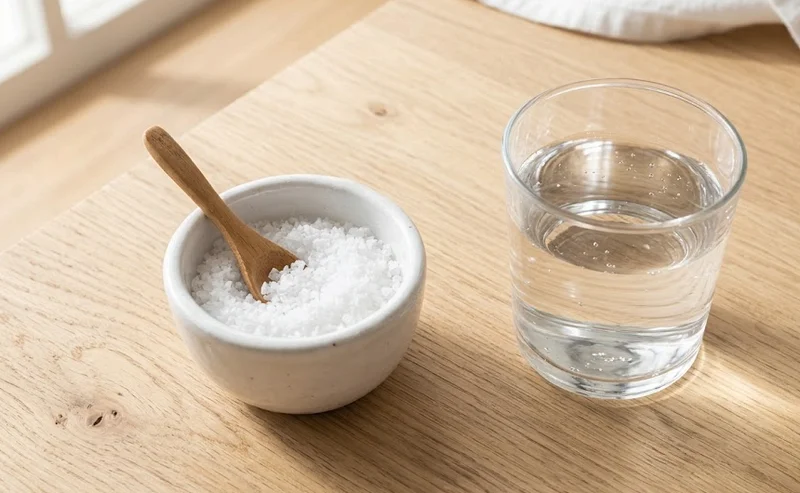
If you decide to make a mixture at home, the type of salt matters. You want plain salt without iodine or anti caking agents. Additives found in regular table salt can irritate sensitive eyes. If you are curious about the purity of different salts, our guide on himalayan salt vs sea salt explains the differences in processing and natural mineral content. For eye rinses, pure and unrefined salt without extra chemicals is always the safest choice.
Making a Safe Saline Rinse
If you choose to try a saline rinse, using a sterile saline mixture from a pharmacy is the safest and most reliable option.
If you must make a mixture at home, dissolve a small amount of plain salt without iodine in water that has been boiled and then fully cooled to a safe and comfortable temperature.
Never use tap water directly, even if it looks clean. Tap water can contain microorganisms that can possibly cause serious eye infections if introduced directly into the eye. Never reuse a rinse mixture or dropper between eyes. Never share a rinse mixture or eye dropper between different people to stop spreading infection further.
How to Apply a Saline Rinse

Wash your hands completely with soap and water before beginning. Using a clean dropper, cotton ball, or sterile eye cup, gently apply the saline mixture to the affected eye. Allow it to wash away discharge and crusting.
Use a fresh cotton ball for each wipe. Always move from the inner corner of the eye outward. Always use a separate and clean cotton ball or applicator if treating both eyes.
What Salt Water Cannot Do
Salt water is a supportive comfort measure, not a cure. It does not kill the bacteria or virus causing the infection. Bacterial conjunctivitis often needs an antibiotic eye drop or ointment prescribed by a doctor to clear properly. Viral conjunctivitis usually has to run its course. This takes one to two weeks.
Depending on salt water alone for a bacterial infection can delay proper treatment. It should be seen as a comfort measure with appropriate medical care instead of a replacement for it.
Soothing Comfort Measures

With a saline rinse, a clean and cool compress applied gently to closed eyes can help ease swelling and discomfort. This is especially helpful for allergic conjunctivitis. For viral or bacterial conjunctivitis, a warm compress is often more soothing. It can help loosen crusted discharge before a saline rinse.
Just as learning how to use himalayan bath salt can soothe your skin and muscles, a warm and clean cloth can bring gentle relief to tired and irritated eyes. Always use a fresh and clean cloth for each application. Use a separate cloth for each eye. Reusing a compress increases the risk of spreading infection.
When to See a Doctor
See a doctor promptly if you have major eye pain. Also look for care if you have sensitivity to light, blurred or reduced vision, or thick yellow or green discharge. You should also see a doctor if symptoms worsen after a few days instead of improving.
If a newborn develops signs of pink eye, get urgent medical attention immediately. Anyone who wears contact lenses and develops symptoms of pink eye should stop wearing lenses immediately and see a doctor.
Preventing the Spread
Pink eye, especially the viral and bacterial forms, spreads easily through direct contact and shared items. Do not touch or rub the affected eye. Wash your hands frequently with soap and water. Do not share towels, pillowcases, or makeup. Replace items like mascara that may have come into contact with the infected eye once symptoms have cleared.
Keeping your home space clean also helps. Maintaining a clean and calm space supports overall recovery. You can read about himalayan salt lamp benefits to understand how these natural items contribute to a peaceful home atmosphere, even if they are just for comfort and decor during your recovery.
The Main Point
Salt water can offer real comfort for irritated and watery eyes. It helps clear discharge and ease crusting, but it works with proper care, not instead of it. If symptoms are severe, involve major pain or vision changes, or are not improving, see a doctor instead of depending on home remedies alone. Keeping a small and dedicated supply of sterile saline on hand at home is a simple and inexpensive way to be ready the next time eye irritation strikes.